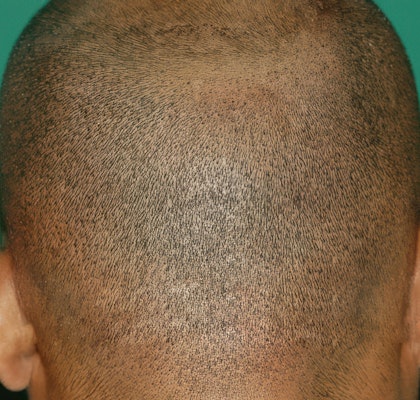
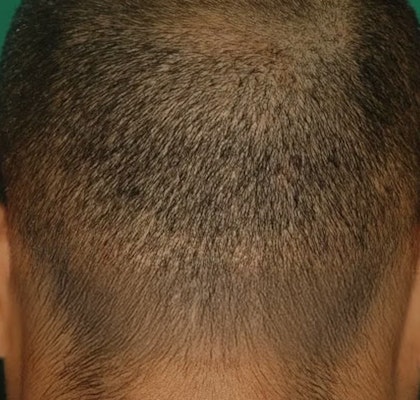
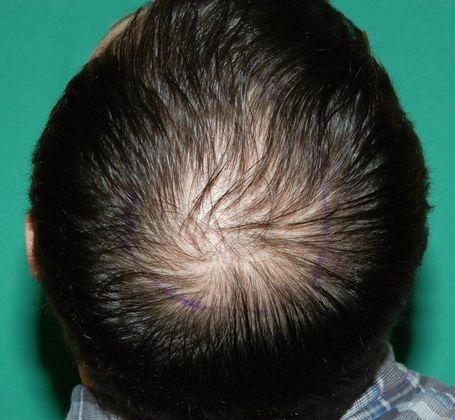
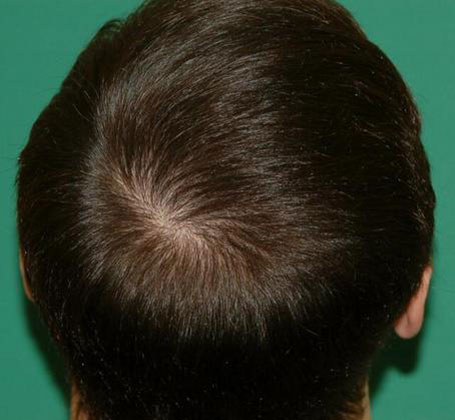
Crown Restoration That Looks Natural From Every Angle
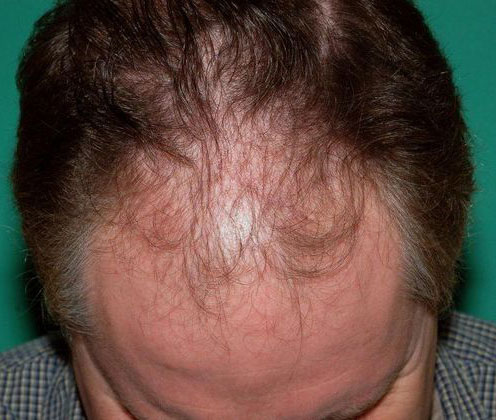
Crown hair transplant is one of the most technically demanding procedures in hair restoration. The natural growth pattern follows a spiral whorl, and density requirements run higher than at the mid-scalp.
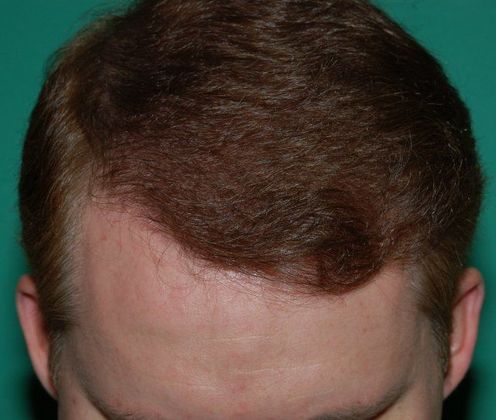
Crown restoration depends on getting the whorl pattern right. CHI's surgeons design the incision pattern and place every follicle personally. Most corporate competitors hand the placement to technicians, which is the wrong choice for a pattern this specific.
Crown restoration at Chicago Hair Institute uses two surgical techniques. Follicular unit extraction (FUE) removes individual follicles using a small round punch and leaves only tiny micro-puncture sites that heal nearly invisibly. Follicular unit transplantation (FUT) removes a small donor strip and is the right choice for higher-density cases. Dr. Raymond Konior and his team match the technique to your case at the consultation.
Some crown cases require a high graft count in a single sitting. We have the surgical team and donor-area planning to execute large-volume sessions of 2,500 grafts or more when needed. Multi-session staging is also available for patients whose donor capacity or timeline calls for a phased approach.
Crown hair transplant pricing varies with the number of grafts you need, whether the work runs across one or two sessions, and your hair type. Our surgeons provide a precise quote during your consultation after they review your crown thinning, your donor capacity, and your full restoration goals.
Crown cases often require more grafts than hairline restoration because the area is visible from above, and density gaps are more obvious. Your consultation includes a count and a session plan so you can see the math before you commit.
Chicago Hair Institute accepts cash and all major credit cards (Visa, Mastercard, Discover, American Express). Financing is not offered through the practice.
Crown work is technically distinct from hairline or mid-scalp restoration.
Three factors drive the difference.
Hairline restoration usually finishes in a single session. Crown restoration commonly runs across two. The reason is density.
A single session can place enough grafts to establish coverage at the crown, but reaching the density that makes the crown read fully natural under overhead light often takes a second pass. Your surgeon typically schedules the second session 9 to 12 months after the first, once the initial transplant has fully grown in and the density gap is visible in person. The staged approach also protects the donor area: extracting too many grafts in a single session can thin the donor zone in a way that limits future work.
Patients who want the full restoration in one session can usually have it done, but the trade-off is donor capacity. We walk through the staged vs. single-session math at the consultation.
"If you are like me, wondering the pros and cons of undergoing hair restoration. Just stop wondering, stop questioning! Do yourself the favor and get it done by Dr Raymond Konior! Im 200% certain... he is the guy you need." —Christian, 5-Star Review
The crown grows in a spiral whorl pattern rather than a uniform direction, and the area is more visible from above than the hairline is from the front. Both differences drive the surgical approach: more careful incision-angle planning at the crown, and typically more grafts per square centimeter to reach a density that looks natural under overhead light.
Crown density requirements are high because the area is visually exposed from above. A single session establishes coverage; a second session 9 to 12 months later adds the density that makes the crown look fully natural. The staged approach also protects the donor area from over-extraction.
The whorl is the spiral growth pattern at the crown, with hair radiating outward from a center point. Placing crown follicles in the wrong direction creates a visibly unnatural cowlick or makes the hair impossible to style. Surgeons who specialize in crown work plan the incision angle for each section of the whorl in advance.
Graft count varies with the size of the thinning area and the density goal. Crown-only cases commonly run 1,500 to 2,500 grafts; larger cases or cases combined with mid-scalp restoration can run 3,000 or more. Your surgeon provides a specific count after reviewing your crown at the consultation.
Yes, when the whorl pattern is restored correctly by a qualified surgeon. The donor follicles used in crown restoration are visually similar to the hair around them, and short hairstyles do not expose the transplant the way they sometimes expose poorly placed hairline grafts. Style flexibility is a key reason to choose a surgeon who places the whorl correctly.