Somewhere around the third week after an eyebrow transplant, a lot of patients have the same quiet moment of panic. They lean toward the bathroom mirror one morning and notice that the new brow hairs they waited for, planned for, and paid for are falling out. For a terrifying second, it looks like the whole procedure has failed.
It hasn't. That shedding is actually one of the clearest signs that everything is going exactly the way it should. The trouble is that almost no one explains it before it happens. Most eyebrow transplant information stops at “the hair sheds, then grows back over the following months." That's true, but not nearly enough of an explanation to keep you calm at 11 p.m. with a few loose hairs in your hand.
So here is the full map: what your brows will actually look like and feel like from the day of surgery to the final result nearly a year later. Read it once, and the scary part stops being scary.
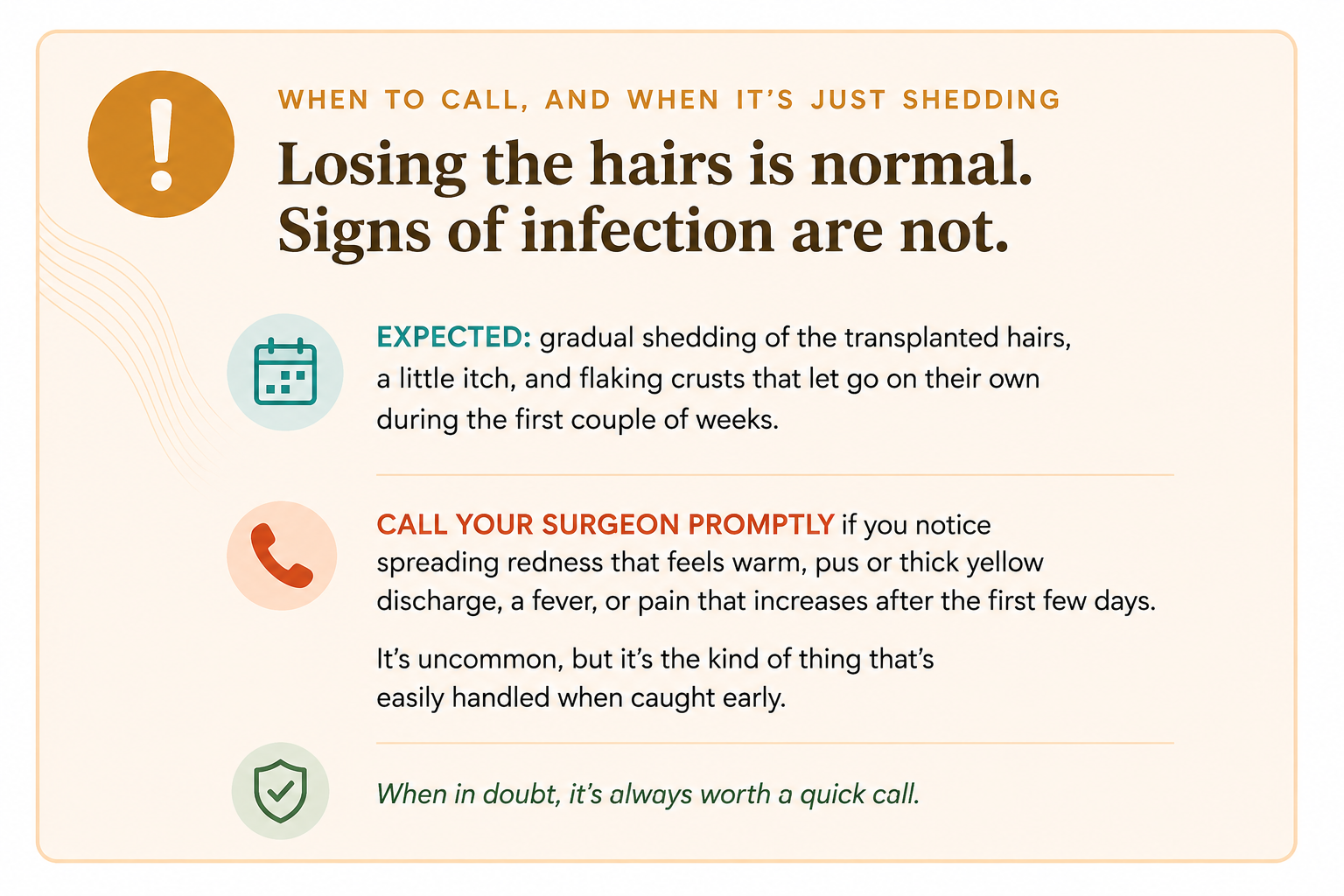
If your transplanted brow hairs fall out somewhere between weeks two and six, the transplant is working, not failing. The living follicles stay anchored under the skin; only the visible hair sheds before it regrows.
The Timeline at a Glance
Days 0–7
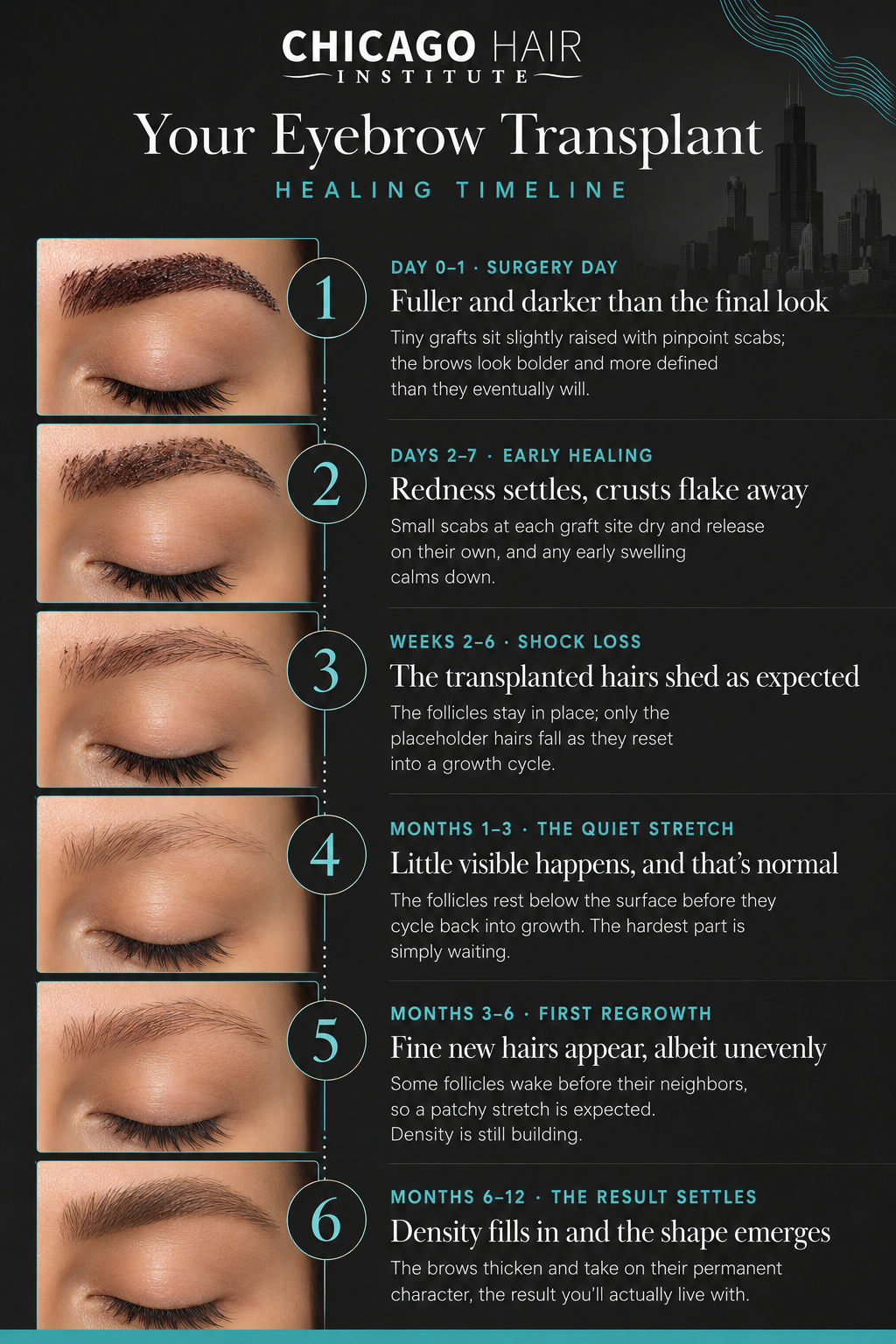
On the day of the procedure, your new brows will look more dramatic than you might expect. They're often fuller, darker, and more sharply defined than the result you're picturing. That's normal. The grafts sit slightly raised in the skin, each one marked by a pinpoint scab, and the transplanted hairs still carry their original scalp texture. A few people notice mild swelling that can drift down toward the eyes for a day or two before it fades.
Over the next several days, the tiny crusts dry and begin to flake off on their own. It's tempting to help them along, but don't. Left alone (and cared for exactly as your surgeon directs), they release naturally, taking nothing important with them. By the end of week one, the bold, just-planted look has usually calmed into something softer and more believable, even though the real growth story hasn't started yet.
Weeks 2–6
This is the part that catches people off guard. Somewhere between the second and sixth week, most of the transplanted hairs fall out. It's called shock loss, and it happens to nearly everyone who has an eyebrow transplant.
Here's what's happening underneath. Moving a follicle interrupts its growth cycle. The follicle responds by releasing the hair it's currently holding and dropping into a resting phase for a while. The hair you see on the towel is only that shaft: the placeholder. The living follicle that will grow your permanent brow stays anchored right where it was placed. In other words, the hair that falls out isn't your result leaving; it's the result getting ready to truly start.
Months 1–3
After the shedding settles, you enter the strangest part of the whole process: the stretch where, from the outside, nothing is happening at all. The transplanted follicles are resting below the surface, quietly getting ready to grow. There's no visible progress to reassure you day to day, which is why this stage tests your patience more than any other.
The best thing you can do here is trust the timeline and leave your brows alone. You're not doing anything wrong, and there's nothing you need to fix. This flat middle is simply part of the arc. It's the reason experienced patients (and their surgeons) don't read “no change” as “no result.”
Months 3–6
Somewhere around the third or fourth month, the new hairs start to appear. It's thin and wispy at first, lighter than they'll eventually be. This is the moment most patients have been waiting for, and it arrives quietly rather than all at once.
Expect it to look uneven for a while. Follicles don't wake on the same schedule; some begin growing weeks ahead of their neighbors, so one section of the brow can look further along than another. That patchiness isn't the final result; it's the middle of it. As more follicles switch on and the hairs thicken, the gaps fill, and the two brows come into balance.
Months 6–12
By six months you're seeing the shape of the finished brow, and over the following months it keeps improving: hairs thicken, density fills in, and the brows settle into the character they'll keep. This is the permanent result the whole timeline was building toward.
It's worth understanding why a good result looks like a real eyebrow, because this is where the craft of the procedure shows. A believable brow is not just “hair in the right area.” Because the grafts are scalp hair by origin, each one has to be placed at a very low angle to the skin and aimed in a specific direction. That means they are swept upward at the inner head of the brow, fanning along the body and arch, then angling down toward the tail. Placed that way, the hairs lie flat and interlace the way native brow hair does, instead of standing up like hair on a scalp. That directional design, decided graft by graft, is the real difference between a brow that looks natural and one that looks “drawn on." It's also why the artistry of placement, not just the number of grafts, shapes the final look.
Two practical notes for the long run: First, final fullness depends on how many grafts your brows needed and on your available donor supply. I'm referring to the same individually harvested follicles used in FUE hair transplant procedures. Second, because the transplanted hair keeps its scalp origins, it will grow longer than typical brow hair and needs an occasional trim to stay shaped. It's a small, permanent piece of upkeep in exchange for a permanent result.
The shedding, the quiet middle, the slow fill-in: these are the well-worn steps of a normal, successful eyebrow transplant. Knowing the map in advance means you get to watch each stage arrive on schedule instead of fearing it.
Everyone heals on a slightly different clock, so the windows above are typical ranges rather than guarantees. In a consultation, your surgeon can explain the version that fits your skin, your donor hair, and the brows you're hoping for.
Chicago Hair Institute
A consultation is the clearest way to understand your healing, your expected results, and whether an eyebrow transplant is right for you.